FAMBRAS Halal Certificadora participates in SIAVS 2026 and highlights opportunities for Brazilian animal protein in an expanding global market
São Paulo, July 13, 2026 – Brazil continues to lead the world in food exports to countries of the Organization of Islamic Cooperation (OIC), with US$ 33.3 billion in exports in 2024. The data comes from the “State of the Global Islamic Economy Report 2025/26,” which also notes that Brazil ranks ahead of China, with US$ 32.6 billion; India, with US$28.7 billion; the United States, with US$21 billion; and Turkey, with US$18.7 billion.
Brazil’s leadership—driven by animal protein exports, particularly Halal chicken —is becoming even more significant in light of the expansion of the global Halal food market, which was worth US$ 1.53 trillion in 2024 and is projected to reach US$ 2.06 trillion by 2029.
It is against this backdrop that FAMBRAS Halal Certificadora will participate in the International Animal Protein Expo — SIAVS 2026, which will take place August 4–6 in the Anhembi District of São Paulo. Organized by the Brazilian Animal Protein Association (ABPA), the event will bring together manufacturers, producers, suppliers, researchers, and buyers from more than 60 countries. More than 31,000 visitors are expected to attend, with an exhibition area of 45,000 square meters—65% larger than that of the previous edition.
According to Ali Zoghbi, Vice-President of FAMBRAS Halal Certificadora, the numbers show that the Halal market can no longer be considered a restricted or niche segment. “Brazil has been the world's largest exporter of Halal food for a long time. This leadership demonstrates the Brazilian industry's capacity to meet highly demanding markets and confirms that Halal certification has become a fundamental strategy for competitiveness and access to international trade,” he states.
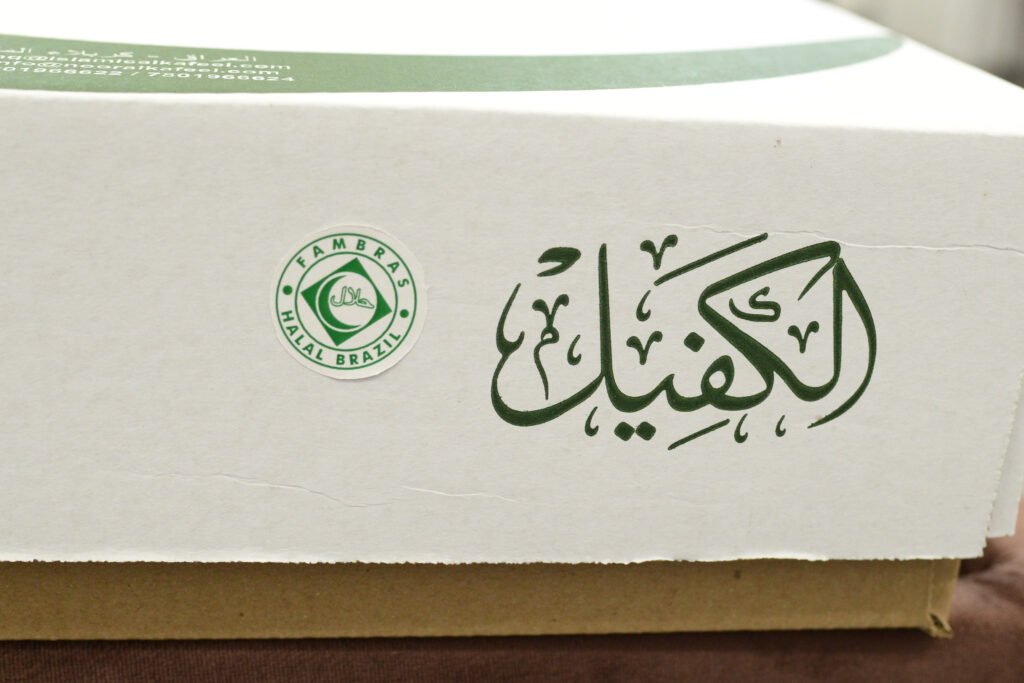
Animal protein at the center of the Halal economy For Brazilian animal protein, especially chicken and beef, the Halal market holds strategic importance. Certification ensures that products and production processes comply with Islamic precepts, involving criteria related to the origin of raw materials, slaughter, processing, storage, and transportation. More than that: it's a seal of quality, also recognized by non-Muslims.
“Halal certification is a bridge of trust between industry and consumer. It ensures compliance with religious requirements, but is also associated with food safety, traceability, process transparency, and the integrity of the entire production chain,” explains Zoghbi.
Although Brazil has already achieved a prominent position, the projected growth in global Halal food consumption reveals that opportunities still exist for expanding exports, diversifying products, and accessing new markets. “Brazil's challenge is not just to maintain its leadership in volume, but to advance in value generation. We are capable of consolidating the country as a global benchmark in quality, innovation, technology, sustainability, and reliability in Halal food production,” assesses Zoghbi.
Certification accompanies market transformation The Halal food sector is also undergoing a transformation driven by strengthened traceability systems and the adoption of new technologies.
Digital tools allow for monitoring the different stages of the production chain, from the origin of ingredients to processing, transportation, and commercialization. Verification systems and QR Codes facilitate checking the authenticity of certificates and information on product compliance.
“Consumers aren't just looking for a label. They want to know where the food came from, how it was produced, and if they can trust the entire supply chain. Certification accompanies this evolution, incorporating processes capable of increasing transparency, safety, and the credibility of operations,” highlights the vice-president of FAMBRAS Halal Certificadora.
During SIAVS 2026, the certification body will present its over 40 years of experience in certifying industries and supply chains for Muslim consumers, as well as guide companies interested in entering or expanding their presence in Halal markets.
“FAMBRAS Halal Certificadora's participation also reinforces the importance of SIAVS as an environment for connection between the Brazilian animal protein industry and buyers from strategic regions, especially the Middle East, Asia, and Africa,” Zoghbi emphasizes. “Our teams will be on hand to assist all companies wishing to conquer the Islamic market. As pioneers in Halal certification in Brazil, we have much to contribute.”.
Service
SIAVS 2026 — International Animal Protein Fair
Data August 4, 5, and 6, 2026
Location: Anhembi District (Av. Olavo Fontoura, 1209 – Santana, São Paulo/SP)
Time: from 10 a.m. to 7 p.m. on the 4th and 5th; and from 10 a.m. to 5 p.m. on the 6th
Information and Accreditation: www.siavs.com.br
FAMBRAS Halal Booth: Street 11, stand 249
About FAMBRAS Halal Certificadora
The first Halal certification body in Brazil, operating since 1979, FAMBRAS Halal is the market leader in Latin America. It operates with audits, inspections, process supervision, and the implementation of the Halal Assurance System for companies wishing to access international markets.www.fambrashalal.com.br)
Press Contact FAMBRAS Halal – Jaê Comunicação
Cristina Thomaz – cristina@jaecom.com.br
(11) 99666-5932