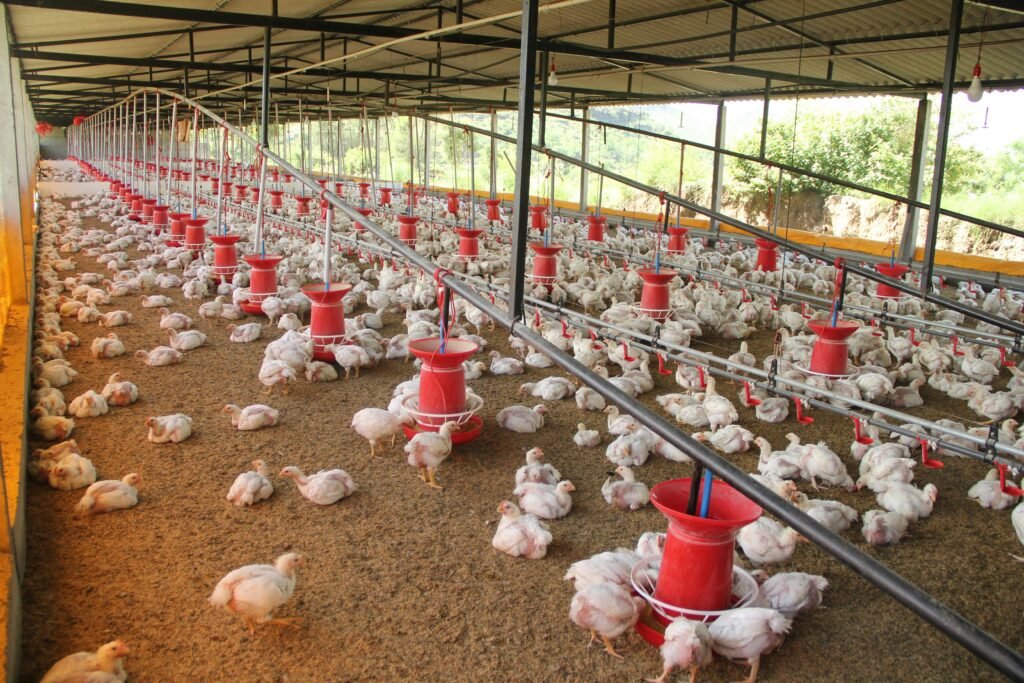
Probiotics improve nutrient absorption and also help combat disease causing organisms in poultry and swine production. Topics were presented to producers during SIAVS 2024.
Global demand for poultry and pork protein remains strong. Data from the Brazilian Animal Protein Association (ABPA) indicate that Brazilian chicken meat exports, for example, are expected to grow by up to 2.2 percent this year, with shipments estimated at 5.25 million tons. The same trend applies to pork exports, which may grow by up to 7.7 percent in 2024, totaling 1.32 million tons.
To meet market demand, producers are increasingly investing in productivity to maintain and expand supply. One way to increase the production potential of swine and poultry is through biotechnology. An example is the use of probiotics, live organisms that provide benefits when administered in adequate amounts.
During the International Animal Protein Exhibition (SIAVS), held in early August in São Paulo, Novonesis, a global leader in biosolutions, presented probiotic based solutions that improve feed conversion into meat production. For swine production, the company introduced SOLPREME®, a product containing two natural probiotic strains, B. subtilis and B. amyloliquefaciens, specifically developed to be delivered via feed to gestating and lactating sows and their piglets during the lactation and nursery phases.
These two probiotic strains were selected by Novonesis for their high capacity to inhibit pathogens, especially C. perfringens and E. coli, which cause diarrhea in suckling and weaned piglets. “These diseases reduce carcass development,” explains Alberto Inoue, Animal Biosolutions LATAM Manager at Novonesis. He adds that fewer cases of diarrhea mean reduced antibiotic use and, consequently, lower production costs and higher productivity.
Another benefit provided by probiotics in animal nutrition is improved herd uniformity. “Uniformity among swine batches is also a very important factor for productivity and profitability in swine production,” notes Inoue. Weight uniformity within a group is measured by the coefficient of variation, which reflects the average weight of individuals in the group. An improvement of 1 percent in uniformity at slaughter is estimated to generate gains ranging from R$ 3.20 to R$ 8.00 per pig produced.
Poultry
In poultry production, probiotics also deliver positive results. During SIAVS, GalliPro® Fit was presented, a probiotic composed of three selected strains: Bacillus subtilis Queen strain, which supports immune system modulation; Bacillus subtilis King strain, which improves protein availability; and Bacillus amyloliquefaciens Knight strain, which increases energy availability from feed for birds.
“These biological microorganisms also enhance the efficiency of disease prevention programs and contribute to food safety, providing profitability,” says Alberto Inoue. He adds that these strains were specifically selected for their ability to inhibit the proliferation of pathogenic microorganisms and to improve feed digestibility.
Outlook
The Brazilian Animal Protein Association projects that 2024 will be a positive year for chicken meat production in the country, with an estimated growth of 1.8 percent in production volume, potentially reaching 15.1 million tons this year, and initial projections of up to 15.35 million tons in 2025, representing a 2.3 percent increase compared to 2024. Annual per capita consumption is expected to remain stable this year at around 45 kg per person, with a possible increase to 46 kg per person in the following year, a 2 percent rise compared to 2024.
About Novonesis
Novonesis is a global company leading the biosolutions era. By harnessing the power of microbiology combined with science, we are transforming how the world produces, consumes and lives. Across more than 30 industries, our biosolutions are already creating value for thousands of customers and benefiting the planet. Our 10,000 employees worldwide work closely with partners and customers to transform business through biology.