Perspectives on the participation of Brazil’s production chain in the global market were discussed during an event held on Wednesday, August 7.
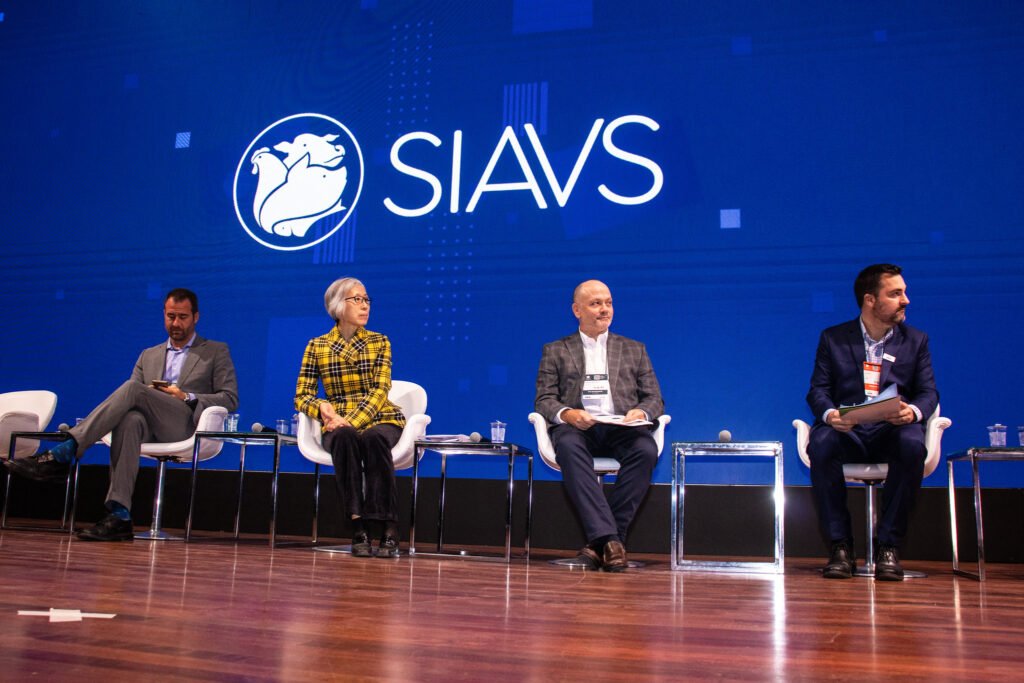
Rising demand in emerging countries and the growing focus on biosecurity are creating an increasingly favorable scenario for Brazil. This was one of the main trends highlighted during a panel with international industry leaders held on Wednesday at the International Animal Protein Exhibition (SIAVS), which is taking place in São Paulo, Brazil, until tomorrow.
Three of the world’s leading sector experts took part in the discussion: Nicolò Cinotti from Italy, Secretary General of the International Poultry Council (IPC); Yu Lu from China, Vice President of the China Chamber of Commerce (CFNA); and Greg Tyler from the United States, President of the USA Poultry and Egg Export Council (USAPEEC).
Cinotti presented a projection of 16 percent growth in global poultry meat consumption by 2033. According to him, nearly 80 percent of this demand will come from middle income countries such as Brazil, which is a global leader in poultry exports and has been steadily expanding its market share, alongside China and Thailand, while the United States has remained stable. “The future of poultry meat for countries like Brazil is bright,” he summarized.
“We want meat,” says Chinese industry leader
Another positive outlook for Brazilian animal protein comes from China. The country, already the main destination for Brazilian poultry and pork shipments, is experiencing growing demand, especially for organic products. “Some studies show that many Chinese consumers are willing to pay two to three times more for healthy, safe and sustainable products,” explained Yu Lu. “The message is clear: we want meat. And Brazil has enormous potential to expand this market with us,” she added.
The United States, the world’s leading poultry producer with 17 percent of global production, followed by Brazil with 12 percent and China with 11.5 percent, has seen Brazil rise on the global stage driven by factors such as biosecurity. “Before, Brazil used to look at the United States, and now we look at Brazil to see what you are doing,” joked USAPEEC President Greg Tyler, highlighting Brazil’s leadership in poultry exports, with a 34.4 percent share compared to 25.8 percent for the United States.
For Ricardo Santin, President of the Brazilian Animal Protein Association (ABPA), the organization that hosts SIAVS, this type of exchange between countries is essential to building an increasingly strong global supply chain. “Sometimes we are competitors, but above all we are friends and committed to working together to build a better future, bringing more animal health and food security to the world,” he said.
Aquaculture on the rise
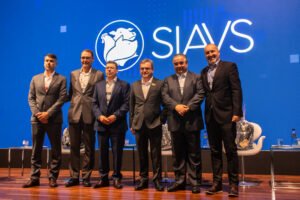
The future of animal proteins was also discussed in a debate among Brazilian business leaders active in the sector. With a dedicated space for companies to present results and outlooks, the panel featured Mario Cutait from Grupo MCassab; José Roberto Goulart from Alibem Alimentos; João Sampaio from Minerva Foods; Fábio Stumpf from BRF; and José Antônio Ribas Junior from Seara.
One of the highlights of the panel was the growth and consolidation outlook for Brazil’s seafood production chain. Driven by tilapia farming, Brazil currently produces 900,000 tons of fish protein per year.
Beef production also had a place in the discussion. According to João Sampaio, the sector tends to reduce land use while increasing output in Brazil, supported by strong efforts in genetic improvement, nutrition and management. He also mentioned Brazil’s strained relationship with the European Union due to trade barriers and export requirements, which have pushed Brazil away from that market. According to him, rather than being a challenge, this represents an opportunity for Brazil’s animal protein sector.
SIAVS takes place at Distrito Anhembi, in São Paulo, from August 6 to 8. To check the full event program, visit www.siavs.com.br